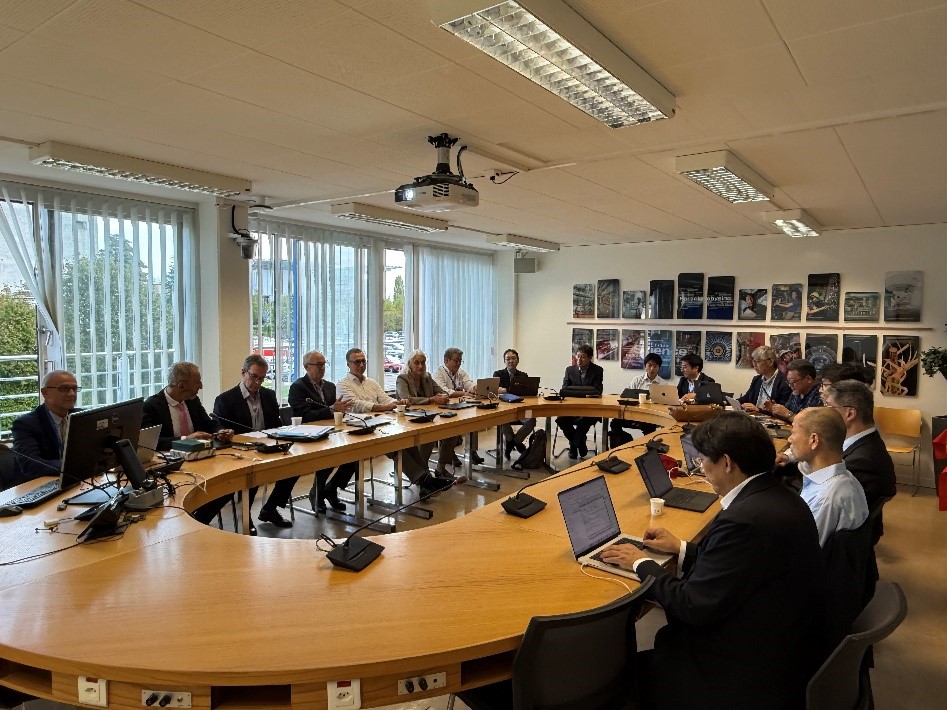
The “KEK-CERN Committee,” which brings together committee members and researchers from KEK and the European Organization for Nuclear Research (CERN), was held at CERN in Geneva, Switzerland, on Monday, September 7 to report the progress of their joint research projects, discuss future prospects, and explore opportunities for further collaboration. The committee is held annually, alternating between KEK and CERN, based on the cooperation agreement between them. It is composed of representatives from both organizations. At this 21st meeting, 12 representatives from KEK, including KEK Director General Shoji Asai, and 12 from CERN, including CERN Director General Mark Thomson, took part. One of the CERN participants joined the meeting remotely. This was the first time the CERN Director General had attended the committee since the 7th meeting in 2012.
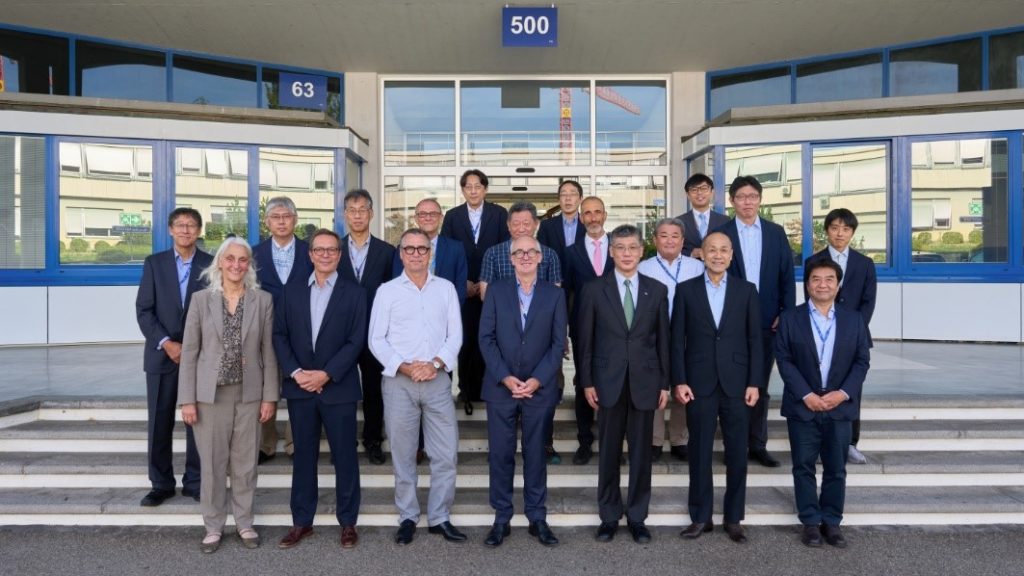
The collaboration between KEK and CERN dates back to 1994, when Japan joined the Large Hadron Collider (LHC) project at CERN. Since then, the two organizations have built a strong and enduring relationship through collaboration in the production of LHC magnets and participation in the ATLAS experiment, one of the LHC’s major international collaborations. Today, KEK and CERN continue to advance a wide range of joint research and development, including the High-Luminosity LHC (HL-LHC) upgrade project, KEK’s SuperKEKB program, next-generation accelerator projects, neutrino research, and quantum technology development. To further strengthen their partnership, KEK and CERN have also maintained liaison offices since 2014.
At this year’s meeting, researchers from both organizations provided detailed updates and held discussions on a broad range of topics. These included ongoing work on upgrades of the ATLAS detector, as well as KEK’s contribution to the HL-LHC construction. The committee also focused on several emerging areas of collaboration aimed at building a stronger partnership in the years ahead. These included potential collaborations with CERN’s proposed next-generation large-scale project; expansion of the framework for technology development toward next-generation accelerators and detectors; potential collaboration on neutrino research; and joint projects with CERN’s Quantum Technology Initiative (QTI). Participants representing the various programs on both sides presented detailed reports and exchanged views on the current status of their work and opportunities for cooperation.
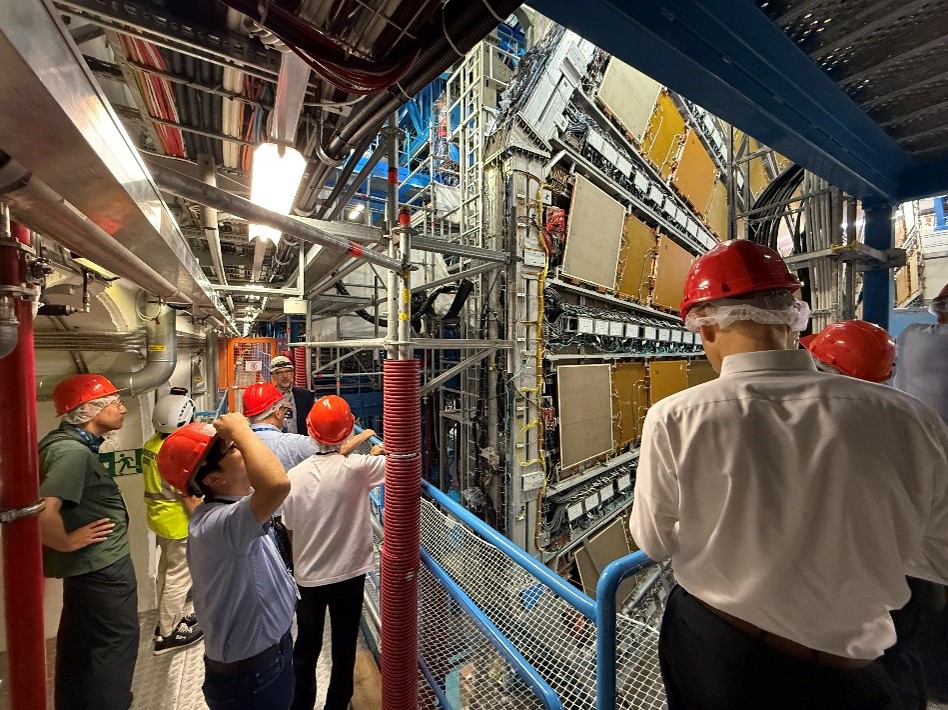
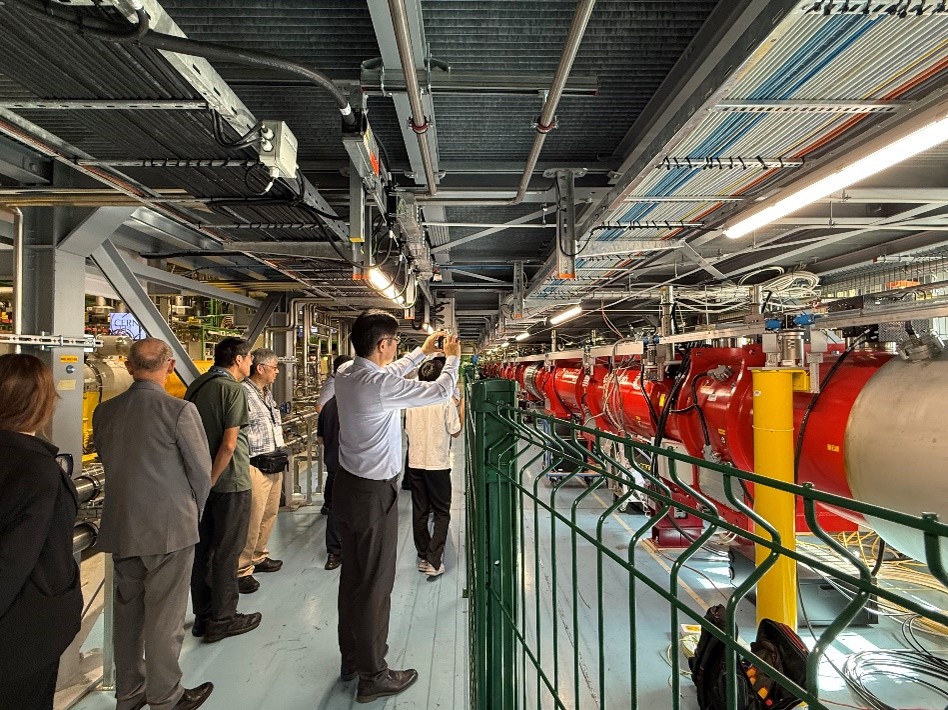
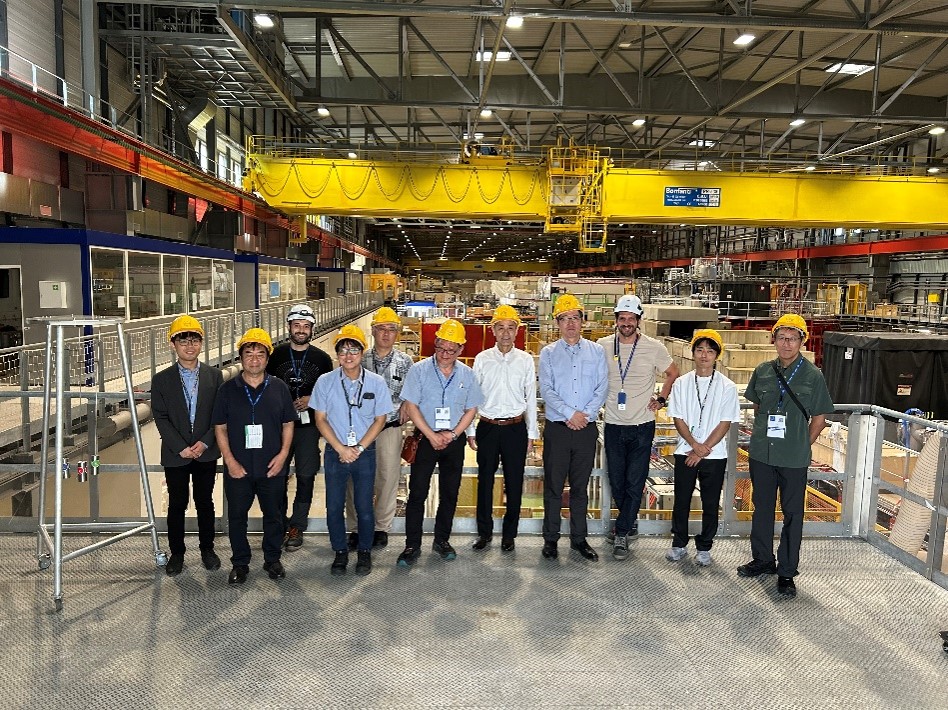
On Tuesday, September 8, the day after the committee meeting, the participants took part in a facility tour organized specially for this committee. They visited the ATLAS detector, where Japanese researchers are currently involved in the upgrade work; SM18, where full-scale tests of the HL-LHC magnet assembly known as the IT String are being carried out; and the Neutrino Platform, a research facility supporting neutrino experiments around the world, including T2K and Hyper-Kamiokande, in which KEK is a key organization. CERN researchers serving as guides at each facility introduced the latest technologies and equipment and provided updates on ongoing projects, Japan’s contributions, and plans for future activities. The participants engaged in lively discussions, including on topics that had been addressed during the meeting the previous day.