
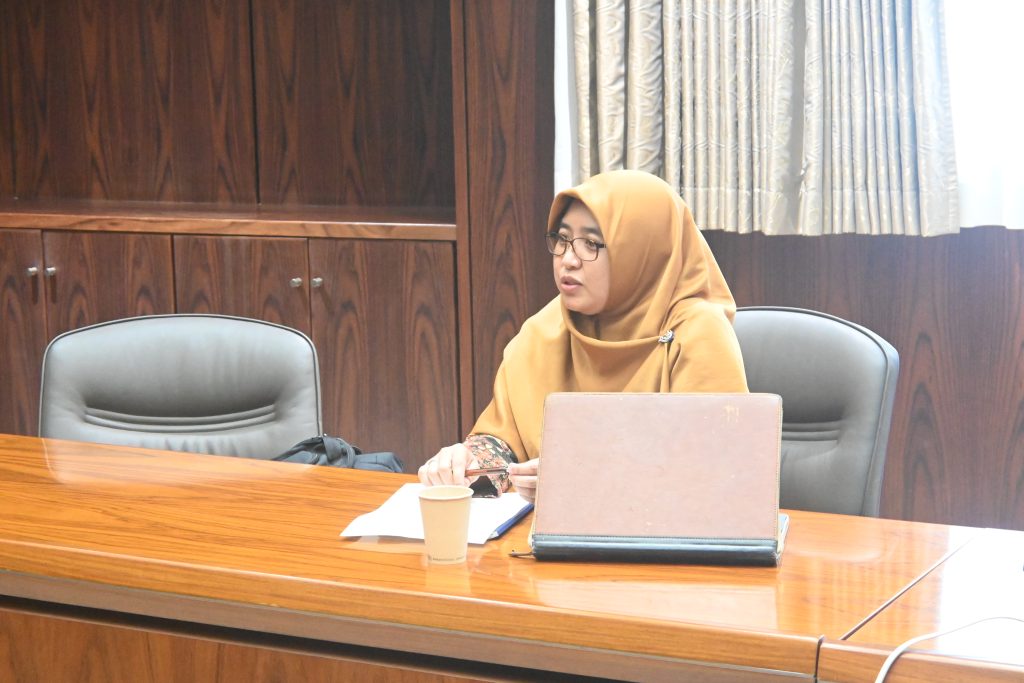
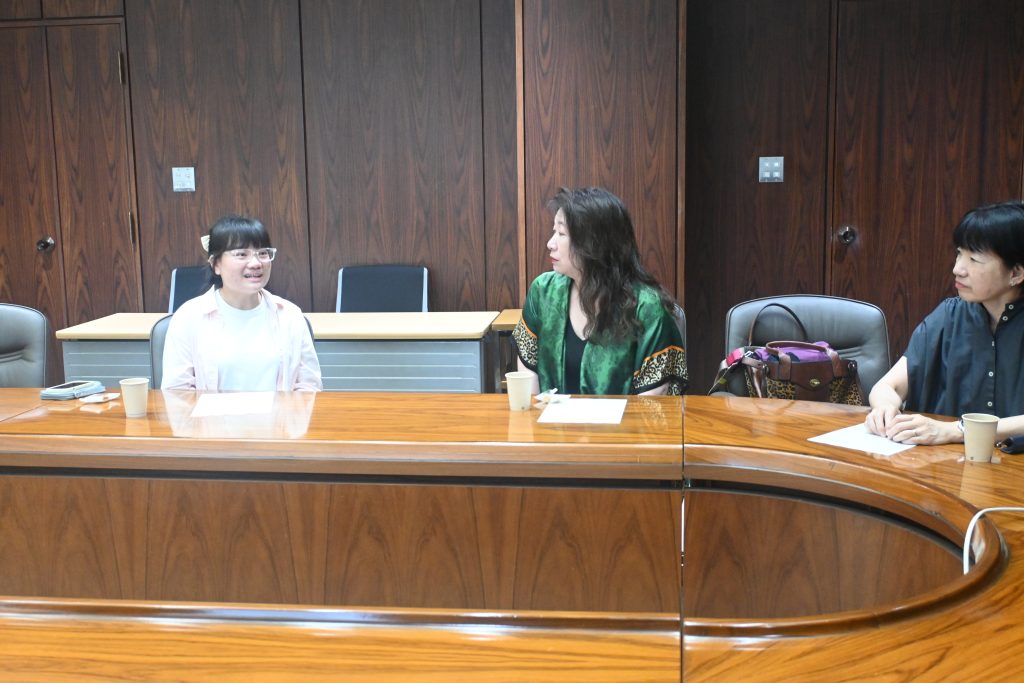
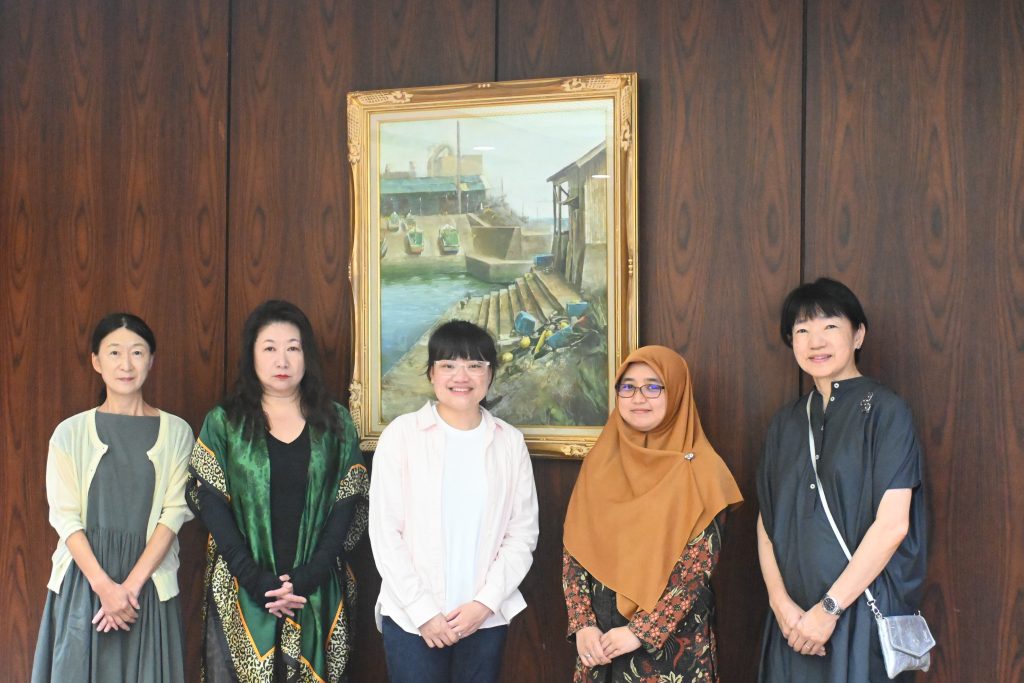
On Friday, August 7, a roundtable discussion was held with an Athena Program Fellow Dr. Ayu, Nur Ika Puji (University of Indonesia). We also invited Ms. Nguyen Thi My Le (Institute of Materials Structure Science, SOKENDAI; Viet Nam National University Ho Chi Minh City), who continues her research at SOKENDAI, to join the discussion, and she kindly agreed to participate.
Dr. Ayu and Ms. Le are junior and senior colleagues who both studied at SOKENDAI. Both are now university lecturers in their home countries, where they are committed to nurturing the next generation of researchers. Against this shared background, they found many points of commonality in their approaches to education and research, as well as in their career development. The discussion took place in a warm and relaxed atmosphere, and the participants actively exchanged views and experiences. The following sections highlight some of the topics discussed.
Careers of Women Researchers in Accelerator Science
In accelerator science and high-energy physics, the proportion of women researchers remains relatively low compared with other STEM fields. Participants identified several possible factors behind this situation, including the perception that working at an accelerator facility can be particularly challenging for women, as well as the difficulty of envisioning a future career in research when only a limited number of countries in Asia have large-scale research facilities.
Dr. Ayu recalled that when she was studying in the engineering department, there were only three women among a total of 50 students. Even in such an environment, she said that interactions with women researchers from different countries and discussions with collaborators provided her with many opportunities to learn and develop new ideas for her research. Drawing on her own experience, she emphasized the importance of continuing to take on challenges in pursuit of one’s goals, saying that rather than waiting for the “perfect timing,” it is important to take initiative and create one’s own path forward.
Ms. Le pointed out that, in accelerator science and high-energy physics, the lack of clearly visible career paths after graduation may be one factor making it difficult for more women to enter the field. She also noted that concerns about working with radiation and its potential impact on health may, in some cases, influence women’s career choices. At KEK, however, radiation dose limits for women are more stringent than the limits prescribed by law.
Regarding work-life balance for women researchers, the participants shared the view that, in some regions and cultural contexts, women researchers may experience conflict between pursuing their careers and meeting social expectations concerning family responsibilities. Dr. Ayu and Ms. Le also recognized that their shared experiences of pursuing research careers while balancing marriage and child-rearing could serve as valuable role models for the next generation of researchers.
Research and Living Environment at the High Energy Accelerator Research Organization (KEK)
Regarding the research environment at KEK, Dr. Ayu reported that she had experienced no major difficulties in carrying out her research. Within her research group, she has been able to communicate smoothly in English and share knowledge and experience with other members. She also noted that she has received appropriate support and consideration in conducting her research.
On the other hand, in terms of daily life, the limited opportunities to interact with other women and the lack of people with whom she could easily discuss concerns or issues specific to women were identified as challenges. The participants also noted that improving Japanese-language skills can be important for becoming more integrated into the local community and society.
Research Activities Connecting Japan with Their Home Countries
Dr. Ayu is currently a university lecturer in Indonesia, where she is involved in teaching and supervising students, while also conducting research on solid-state batteries. She hopes to make use of the research skills and professional networks she has developed in Japan in her future research activities. During her visit, she had detailed discussions on potential research developments in Indonesia and opportunities for future collaborative research.
In particular, she noted that discussions and collaborations with Japanese researchers had helped her clarify the research challenges and directions she would like to pursue in the future, expressing her hopes for further research collaboration connecting Japan and Indonesia.
Ms. Le explained that, as it was not easy to build a research career in nuclear or particle physics in Vietnam, she gradually expanded her research into materials science. Looking back on her research activities at KEK, she said that she had deepened her knowledge and understanding of radiation-based technologies and high-energy physics through her experience at KEK.
She plans to return to Vietnam and continue her research and teaching at a university. Looking ahead, she expressed her hope of contributing to the promotion of student and research exchanges as a bridge connecting research institutions in Japan and Vietnam.
KEK’s Support for Young Researchers: The Athena Program
Since 2015, KEK has hosted the Athena Program, which provides young and mid-career female researchers in the Asia-Pacific region with opportunities to conduct research at KEK. In fiscal year 2026, four fellows have been selected to participate in the program.
By sharing the passion for research and the diverse career paths of women researchers working across national borders, KEK’s Diversity, Equity & Inclusion (DE&I) Office aims to help the next generation of researchers envision their own futures. To this end, we will continue to promote the visibility of role models and support networking opportunities for women researchers.