
On November 9–10, 2026, Norbert Holtkamp, Director of the U.S. Department of Energy’s (DOE) Fermi National Accelerator Laboratory (Fermilab), visited the High Energy Accelerator Research Organization (KEK) in Japan.
Fermilab and KEK have maintained close collaborative ties for many years, conducting joint research in particle physics, accelerator science, and related fields under the U.S.–Japan Science and Technology Cooperation Program in High Energy Physics, established in 1979. This was Holtkamp’s first visit to KEK since assuming the position of Fermilab Director in January 2026.
During his visit, Holtkamp met with KEK Director General Shoji Asai and other KEK representatives to exchange views on the history of collaboration between the two institutions and prospects for future cooperation. Discussions covered a broad range of research activities at KEK’s Tsukuba and Tokai campuses, including accelerator science and quantum technologies, and explored opportunities to further strengthen research collaboration between Fermilab and KEK.
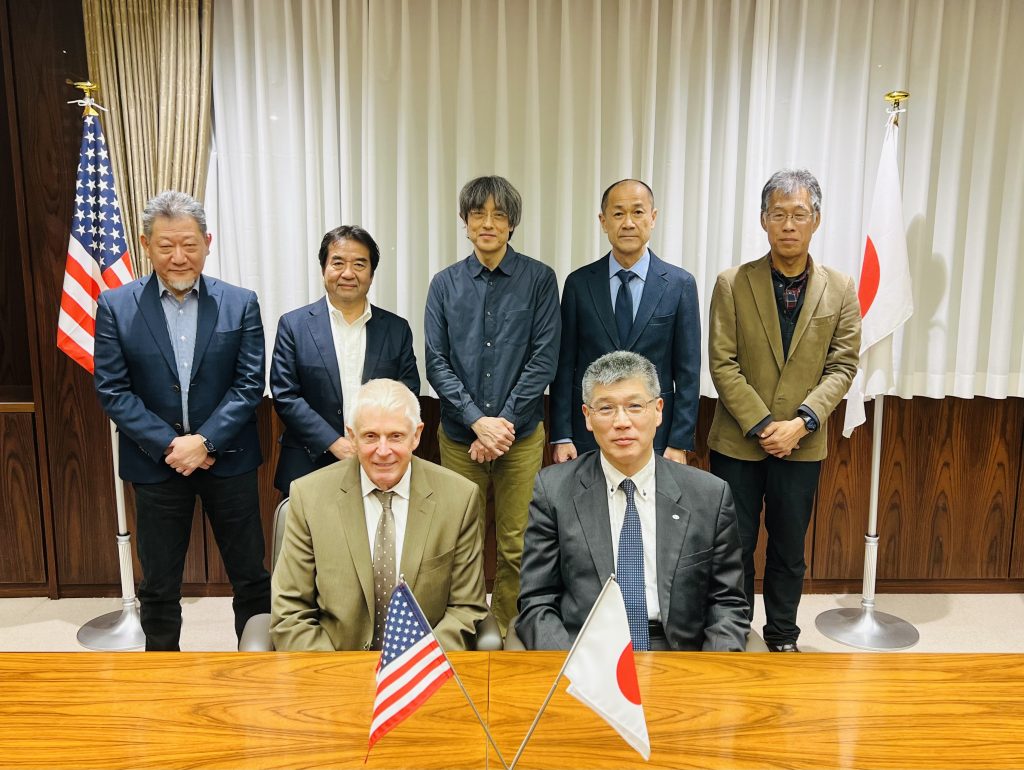
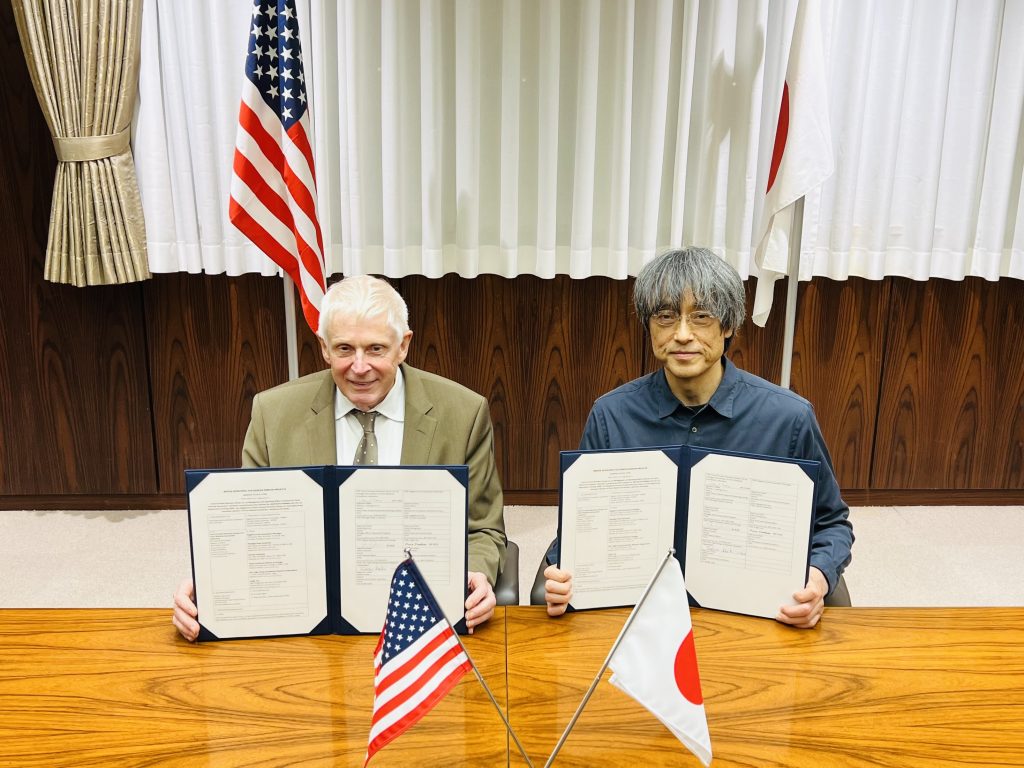
The discussions also addressed the Genesis Mission, an initiative being advanced in the United States. The Genesis Mission aims to accelerate scientific discovery and technological innovation by integrating vast amounts of scientific data held by U.S. supercomputers, national laboratories, universities, private companies, and government agencies, and leveraging artificial intelligence (AI). The two institutions exchanged views on potential future collaboration within this new research framework. In addition, they signed a BRIDGE AGREEMENT FOR GENESIS MISSION PROJECTS covering accelerator-related research to be conducted under the framework.
As part of the visit, Holtkamp toured several of KEK’s research facilities to learn about the organization’s wide-ranging research activities. At the Tsukuba Campus, he visited the International Center for Quantum-field Measurement Systems for Studies of the Universe and Particles (WPI-QUP), a research hub for quantum technology, as well as the Belle II experimental facility, the Superconducting RF Test Facility (STF), the compact Energy Recovery Linac (cERL), and the Accelerator Test Facility (ATF).
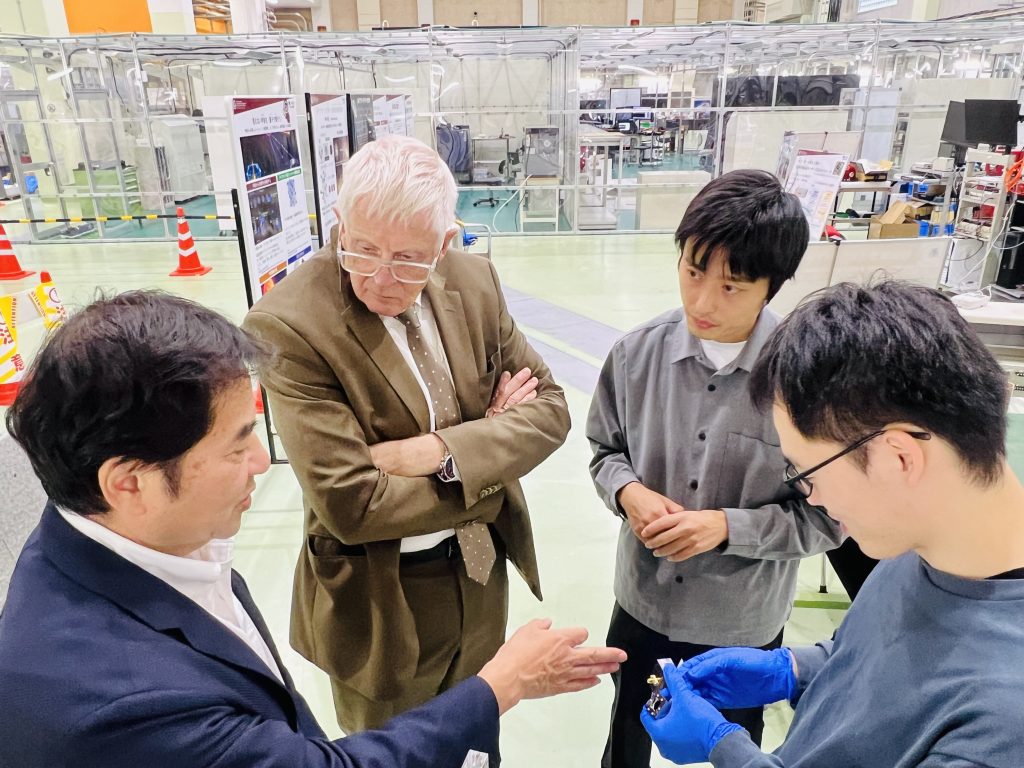
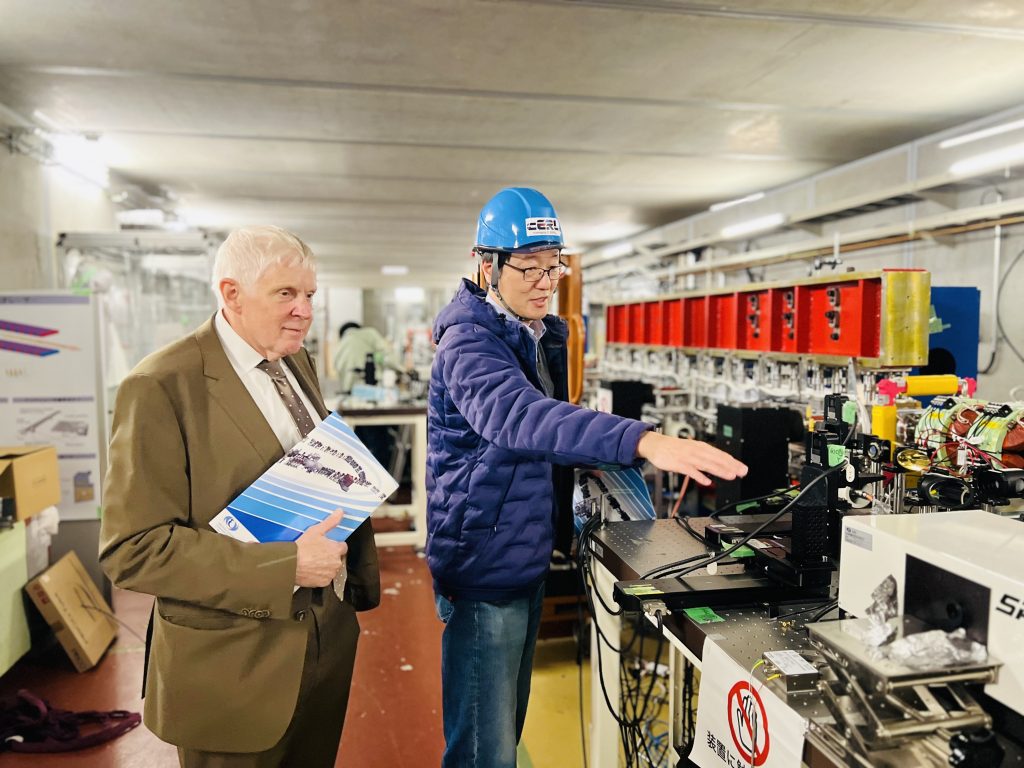
At the Tokai Campus, Holtkamp visited the Japan Proton Accelerator Research Complex (J-PARC), where he toured the Materials and Life Science Experimental Facility (MLF), the Hadron Experimental Facility, and the Neutrino Experimental Facility. He also visited the construction site of the Intermediate Water Cherenkov Detector (IWCD), a facility related to neutrino research. Construction work is currently underway at J-PARC for the Hyper-Kamiokande (HK) project. Together with the Deep Underground Neutrino Experiment (DUNE), conducted as part of the Long-Baseline Neutrino Facility (LBNF) project in the United States, HK is one of the world’s major next-generation neutrino experiments.
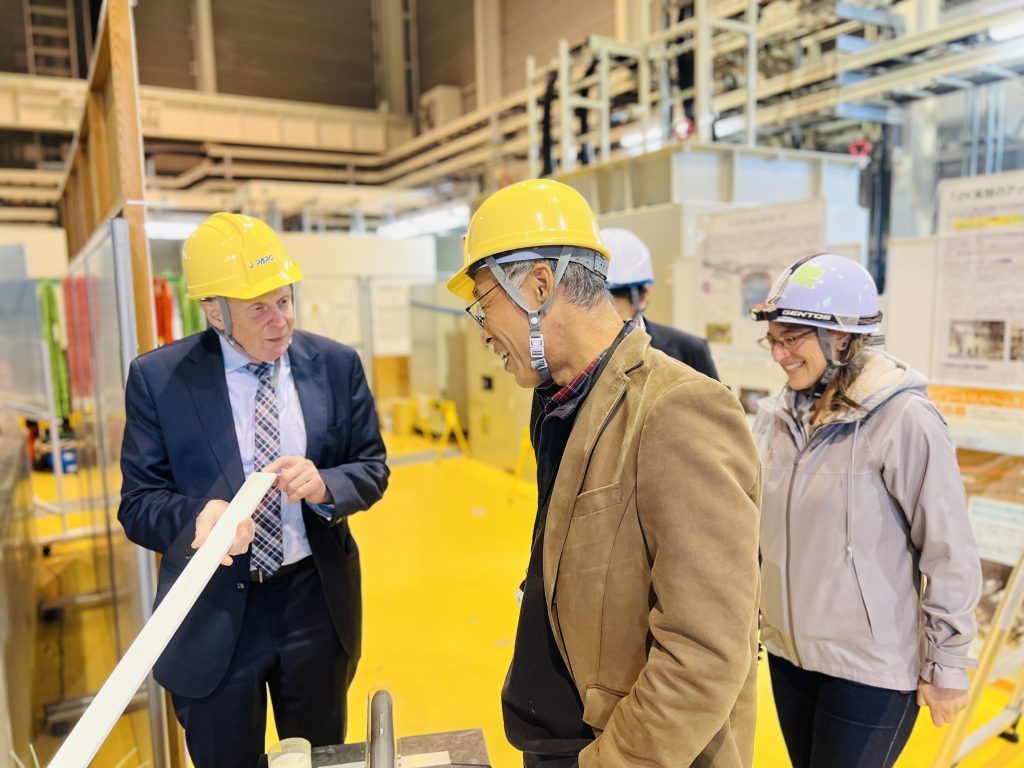
The visit provided an opportunity for Fermilab and KEK to reaffirm their longstanding collaboration in accelerator science and particle physics, while also exploring new opportunities for cooperation through the Genesis Mission. Building on the complementary strengths of the two institutions, continued collaboration is expected to advance cutting-edge research across a broad range of fields, including accelerator science, particle and nuclear physics, and quantum technologies.