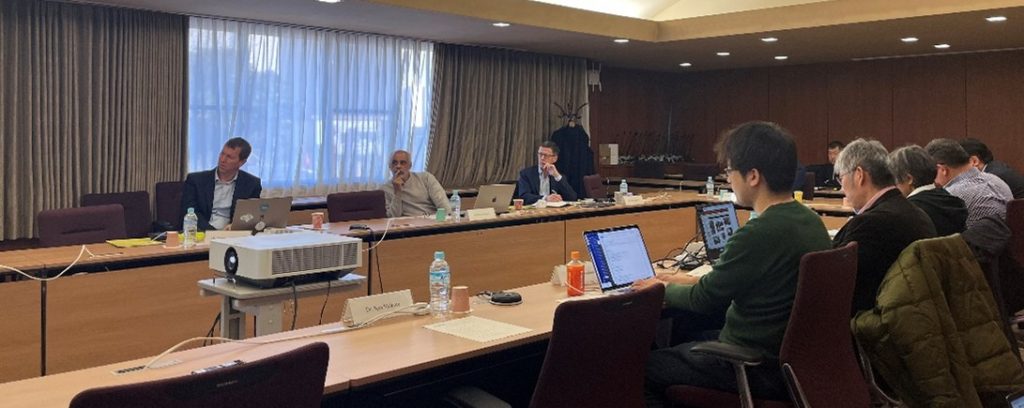
The “KEK–CERN Committee,” where representatives from the European Organization for Nuclear Research (CERN) and KEK report on the progress of their joint research and discuss future collaboration, was held on Wednesday, November 19, at the KEK Tsukuba Campus. Based on the cooperation agreement between the two institutions, this committee is composed of executives and director-level members from both CERN and KEK and is held annually, alternating between CERN and KEK.This year marked the 20th meeting of the committee. Ten participants joined from CERN (six of whom attended online), and nine from KEK (one of whom attended online).
The collaboration between KEK and CERN began in 1994, when Japan joined the Large Hadron Collider (LHC) project at CERN. Since then, the two institutions have built a strong and enduring relationship through contributions such as the production of LHC magnets and participation in the ATLAS experiment, an international collaborative experiment at the LHC. Currently, KEK and CERN continue to advance joint research and development in a wide range of projects, including the High-Luminosity LHC (HL-LHC) Upgrade, multinational collaboration projects under KEK’s Super KEKB program, and studies toward next-generation linear colliders. To further strengthen their partnership, both institutions established liaison offices in 2014.
At this committee meeting, researchers representing each group reported on a wide range of topics, including not only ongoing collaborative activities—such as the progress of the ATLAS experiment and the status of the superconducting beam-separation dipole magnet (D1) and its quench protection heater power supply for the HL-LHC construction—but also the collaboration plan for the Proton Accelerator development at J-PARC, the progress of the Future Circular Collider (FCC) which is a candidate project of CERN future plan, and initiatives and potential areas of collaboration in quantum technologies under CERN QTI. These reports covered both current and future cooperative activities.
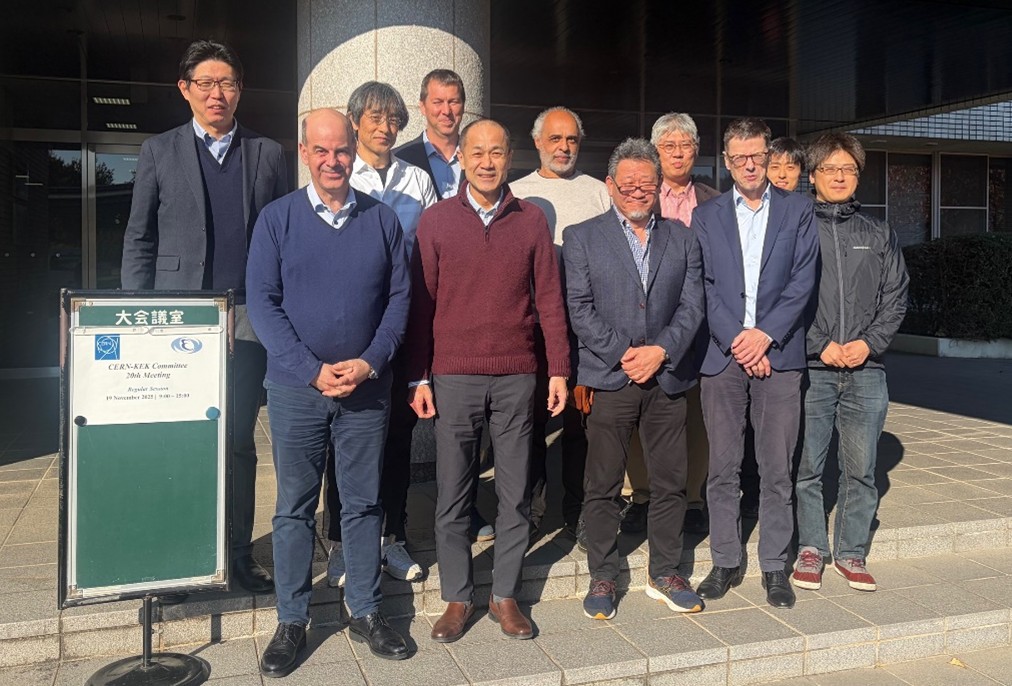
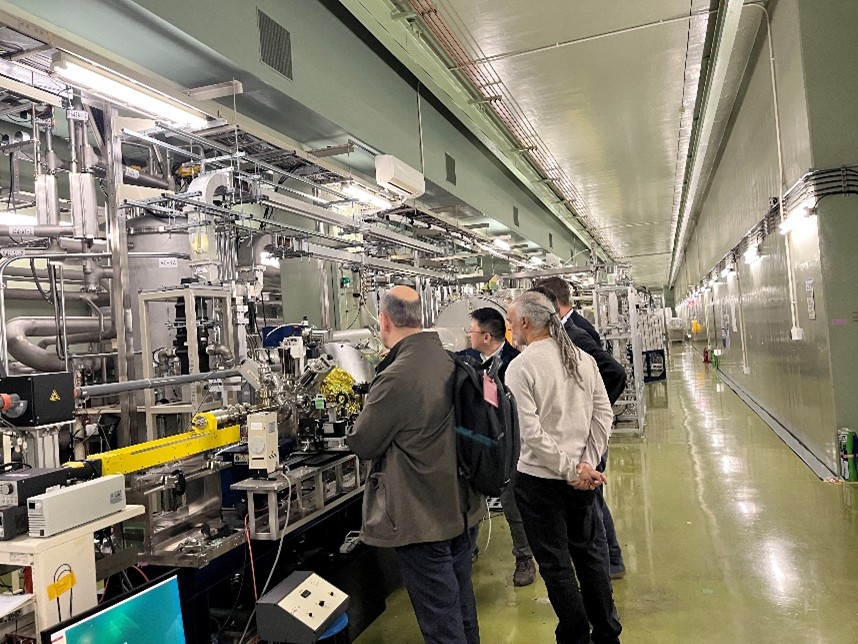
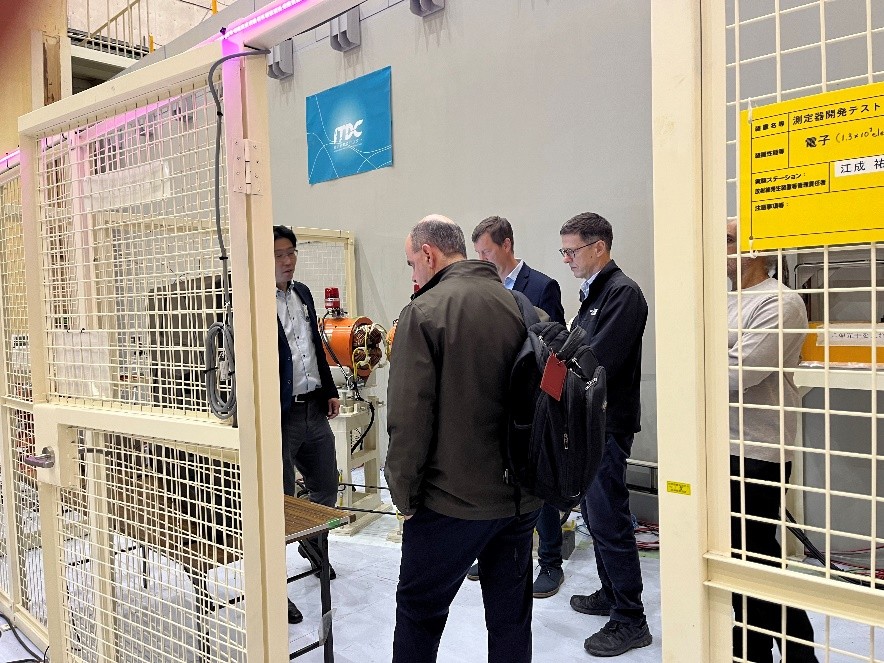
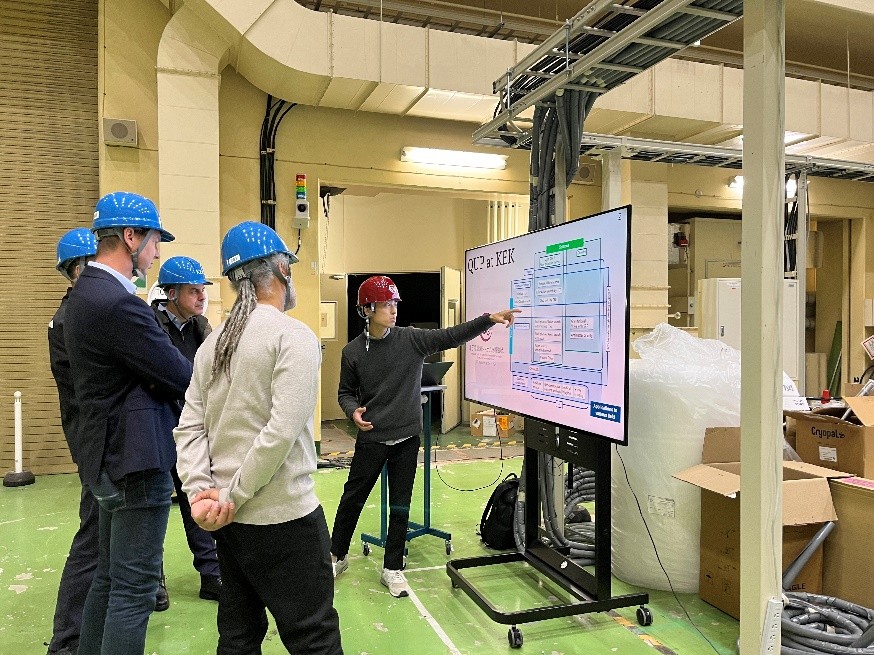
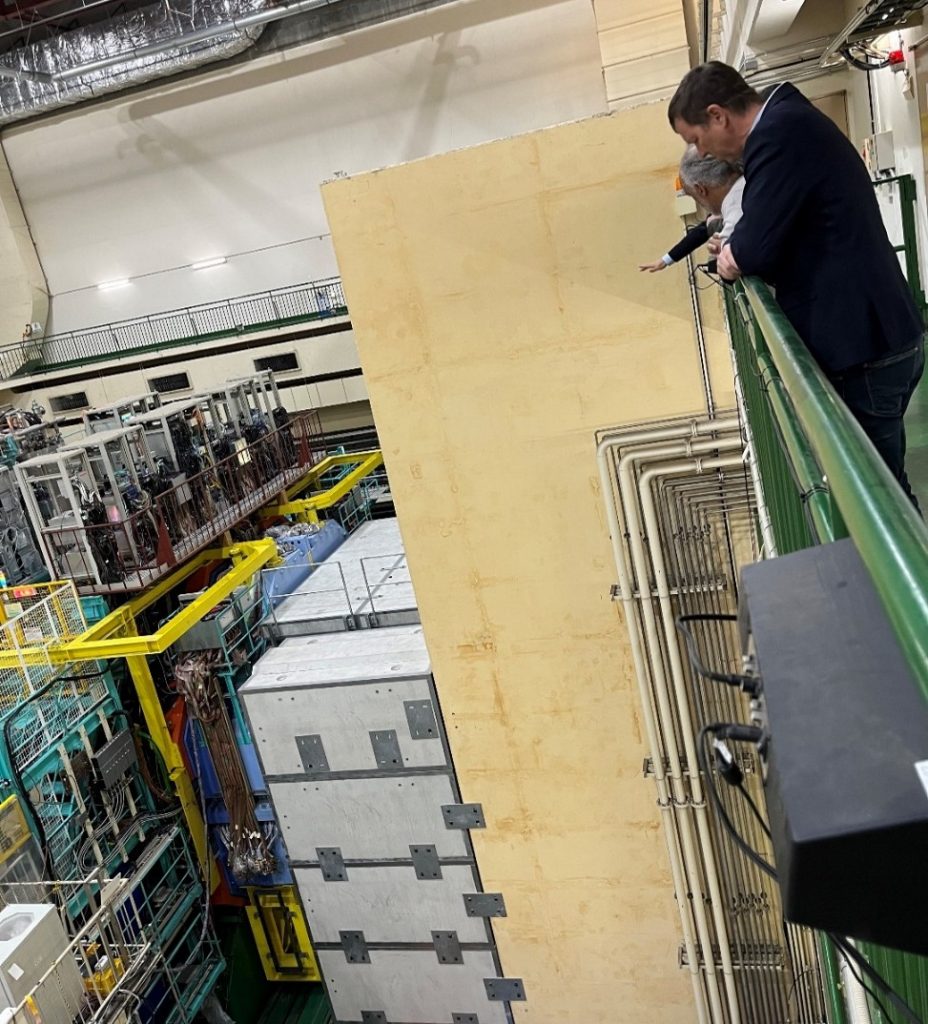
Prior to the committee meeting, a tour of the Tsukuba Campus was conducted on Tuesday, November 18. The group visited the Superconducting RF Test Facility (STF), the Superconducting Accelerator Utilization Promotion Building (COI Building), the PF-AR test beamline of the Instrumentation Technology Development Center (ITDC), the Fuji Experimental Hall housing laboratories of QUP, and the Tsukuba Experimental Hall where the Belle II detector is located. KEK researchers provided detailed explanations of the latest technologies, facilities, project progress, and international collaborative efforts, which the participants listened to attentively. Numerous questions were raised, including those related to future plans, leading to active and engaging discussions.